
Did you know the body has a built-in mechanism to prevent blood clots? The soleus muscle, sometimes called the body’s “second heart,” plays a vital role in venous return from the lower extremities.
However, after surgery, when most patients are sedentary, the soleus muscle goes quiet, and blood flow in the soleal veins slows. When that happens, the body loses a central natural defense against blood clots.
That’s one reason why DVT prevention is such a critical aspect of post-surgical care. Pharmaceuticals, exercises, and medical devices are all intended to help prevent dangerous blood clots, especially after orthopedic or lower‑extremity procedures.
For administrators and surgery center leaders, understanding this mechanism can help improve outcomes, reduce the risk of DVT, and enhance postoperative protocols.
Why Clinicians Call the Soleus Muscle the Body’s “Second Heart”
The soleus is a flat, powerful muscle located deep within the calf. It contracts every time a person stands, walks, or flexes the ankle. These contractions compress the deep veins of the leg, pushing blood upward and counteracting gravity’s pull.
This mechanism, known as the calf muscle pump, is a major contributor to venous return.
In clinical literature, it is often described as the body’s “second heart” because of its role in assisting circulation.
When the soleus muscle is active, circulation improves. When it’s inactive, blood can pool in the lower extremities, increasing the risk of venous stasis and deep vein thrombosis (DVT). If left unchecked, these clots can travel to the lungs, causing potentially a deadly pulmonary embolism (PE).
What Happens to the Soleus Muscle After Surgery
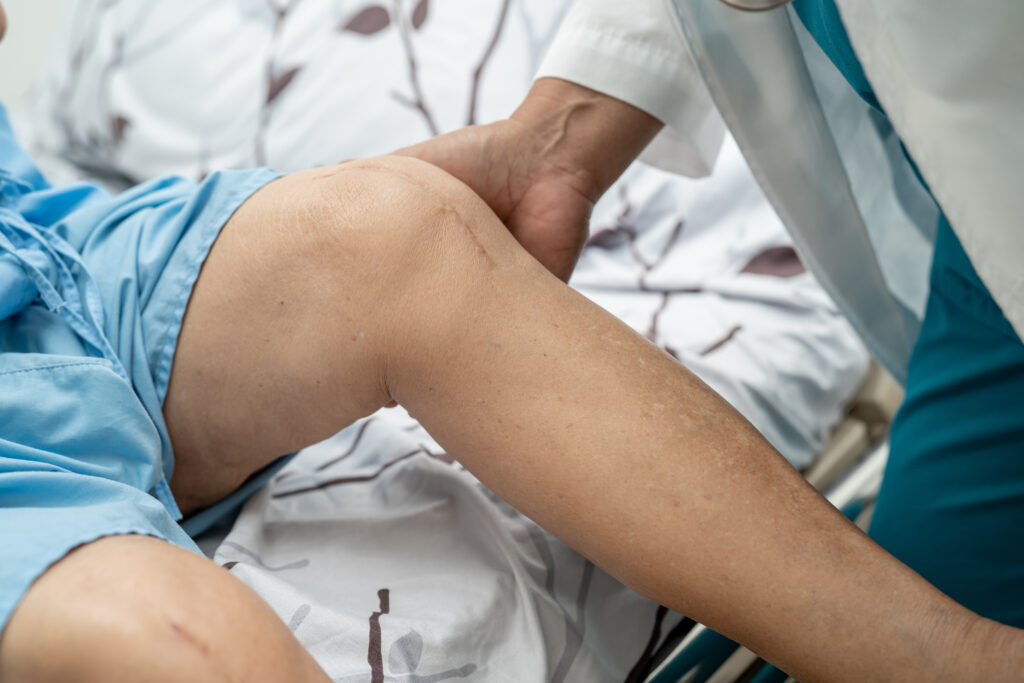
After surgery, patients are typically far less mobile for days or even weeks. Orthopedic patients, especially those recovering from knee, foot, ankle, hip, or spine procedures, are often limited or restricted in weight-bearing and walking.
When movement decreases, the soleus muscle stops performing its pumping action. The natural “second heart” is effectively offline.
This can create several challenges:
- Reduced venous return
- Increased venous pressure and pooling
- Higher risk of clot formation
- Swelling and discomfort
- Slower overall recovery
The CDC notes that surgery and immobility are two of the top risk factors for DVT in the United States, where up to 900,000 cases of VTE occur annually.
For facilities focused on minimizing complications and readmissions, it’s helpful to understand how the body’s natural circulatory mechanisms function — or fail to do so — after surgery.
How Compression Devices Support Circulation After Surgery
Because the soleus muscle is a primary driver of venous return, clinicians have long employed external methods to replicate its pumping action in patients who are unable to move.
Intermittent pneumatic compression (IPC) devices are designed specifically to simulate the contraction‑relaxation cycle in the lower legs after surgery. These systems rhythmically inflate and deflate sleeves around the calf, applying pressure that mimics natural muscle activity and helps maintain healthy blood flow.
At Compression Solutions, this biological principle is at the core of our technology, powering our flagship ambulatory DVT devices:
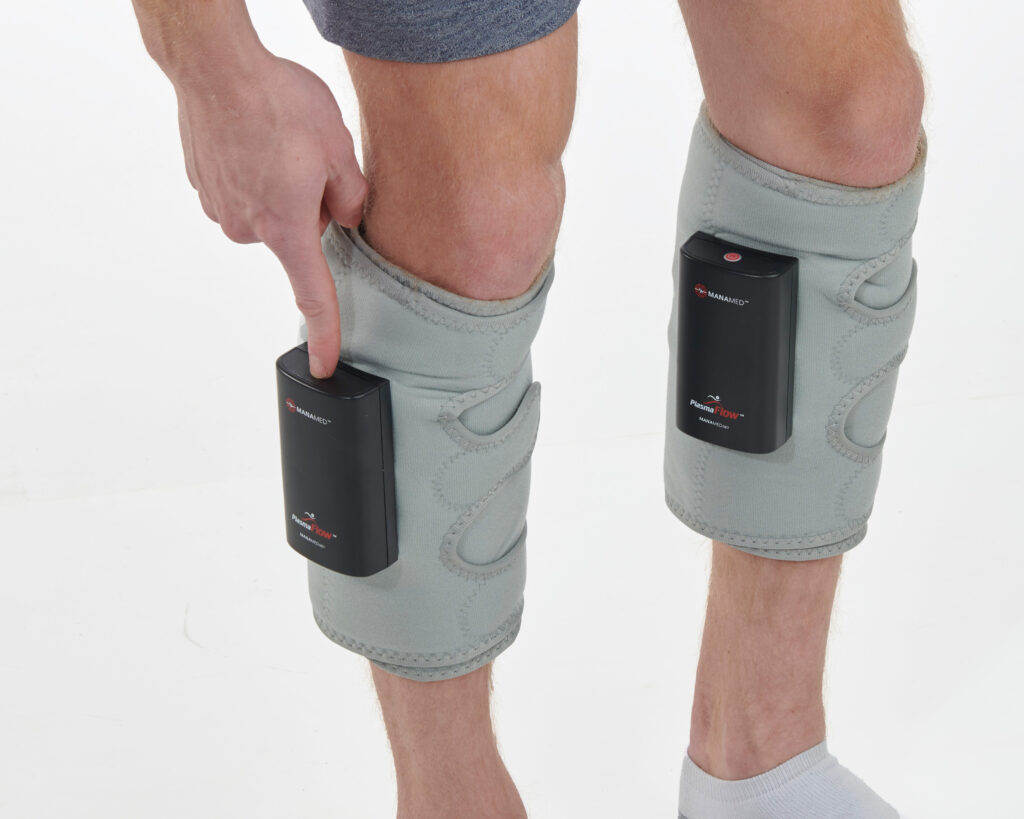
PlasmaFlow
PlasmaFlow is an easy-to-use, portable system prescribed by a physician. It’s designed for use in the home or clinical setting to help prevent the onset of DVT in patients by stimulating blood flow in the extremities, simulating muscle contractions.
Triple Play VT
The TriplePlay-VT Vascular Therapy System is a lightweight, portable, rechargeable, battery-powered prescription device designed to stimulate blood flow and help prevent deep vein thrombosis (DVT). This comprehensive ambulatory compression system features pumps for both clinic and home use, along with cuffs for the calf, foot, or whole leg.
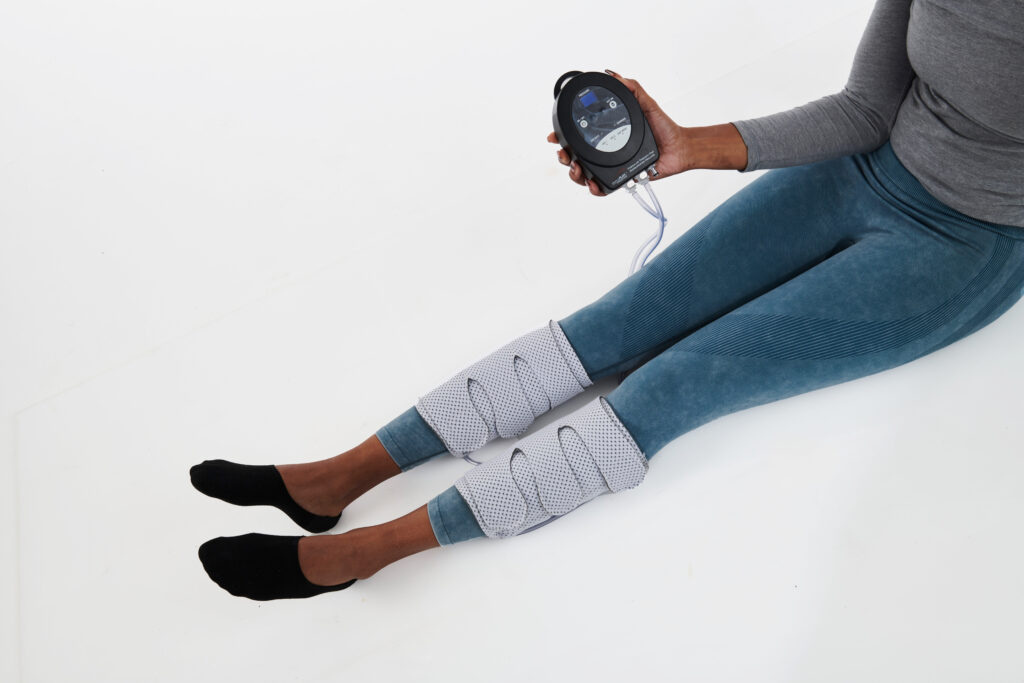
Both devices extend the work of the calf muscle pump — providing an effective mechanical assist that can be used from discharge through home recovery.
“IPC is a noninvasive technique based on the application of inflatable sleeves exercising sequential and intermittent pressures reproducing the same physiologic mechanism of the calf muscle pump during walking.”
– Mirko Tessari, et al. “Effects of intermittent pneumatic compression treatment on clinical outcomes and biochemical markers in patients at low mobility with lower limb edema,” Journal of Vascular Surgery: Venous and Lymphatic Disorders,
Why This Matters for ASCs and Hospital Leaders
For administrators, equipment managers, and clinical directors, supporting circulation after surgery is a tangible way to improve outcomes.
Ambulatory compression devices help facilities:
- Maintain continuity of care from OR to home
- Provide mechanical supplementation to pharmacological DVT prophylaxis options
- Support same‑day discharge pathways
- Reduce the risk of post‑operative complications
In short: when the soleus muscle is not doing its job after surgery, compression therapy can help increase circulation.
Keep the Blood Flowing — Even When Patients Can’t
The soleus muscle is an integral part of circulation, but surgery and immobility render it inactive right when patients could need it most. Ambulatory compression devices can help maintain this vital function, supporting better recovery and reducing the risk of DVT.
Contact our sales team to learn how PlasmaFlow and Triple Play VT can strengthen your post‑operative protocols and support safer, more effective patient recovery.
